
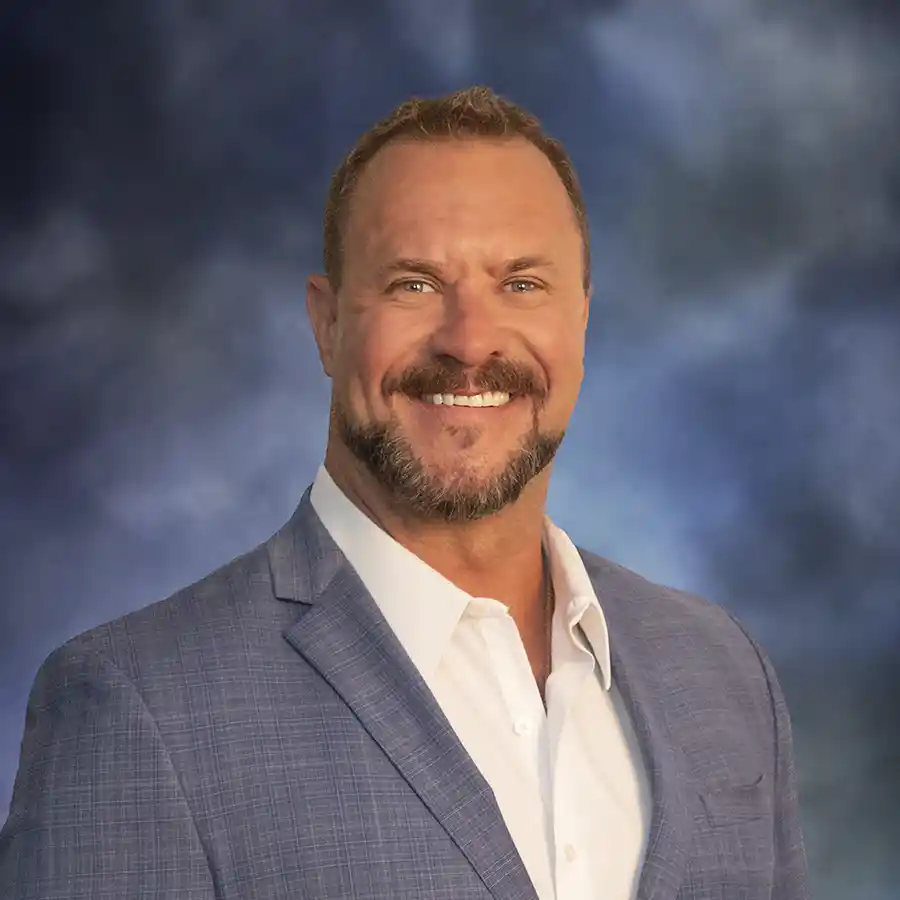
Michael Julian
Second Generation CEO
Executive protection for family offices is a coordinated security program that protects every member of a wealthy family - the principal, the spouse, and adult children - rather than only the named executive at the operating company. It treats the family as the protected unit, integrates residential, travel, and event coverage under one command structure, and is built to be low-visibility, family-friendly, and adaptable to the day-to-day rhythm of private life. The family office is uniquely positioned to coordinate it because the family office already sits at the intersection of wealth, schedule, travel, and household management.
For most of the past two decades, executive protection conversations sat inside the operating company - handled by the CEO, the general counsel, or the head of corporate security. That has changed. The U.S. now hosts an estimated 147,950 ultra-high-net-worth individuals - roughly one third of the world’s UHNW population - and the number of single-family offices coordinating their affairs has grown in tandem (Altrata / Wealth-X UHNW Wealth Report, 2024). Each of those families increasingly views security as a household function, not a corporate one.
There are practical reasons for the shift. The principal’s risk profile rarely stops at the office door - it follows the spouse to charity events, the children to college campuses, and the family on private travel. Insurance carriers writing wealth-protection and kidnap-and-ransom (K&R) policies now expect documented protective measures across the family unit, not just the named insured. And the rise of doxxing, online stalking, and targeted threats against family members has made siloed corporate-only protection look incomplete.
Targeted violence against high-profile principals and their families continues to rise in salience: in its 2024 Mass Attacks in Public Spaces report, the U.S. Secret Service’s National Threat Assessment Center documented a sustained pattern of pre-attack grievance and surveillance behavior in domestic targeted-violence cases, much of which is observable to family-office security staff before it escalates (Secret Service NTAC, 2024).
A mature family-office security program is built around the family’s actual life, not a template. The same engagement may include heavily detailed coverage for the principal one week and almost-invisible coverage for an adult child’s study-abroad semester the next. The common architecture has six layers:
• Risk and threat assessment for each family member: a tailored profile for the principal, the spouse, and each adult child, covering public exposure, business affiliations, social-media presence, prior incidents, and travel patterns.
• Residential security: primary residence, secondary residences, and any frequently-used properties (lake house, ranch, beach house) covered with the right mix of technology, posted personnel, and on-call response. This is where families almost always prefer low-visibility protection for principals and their families over uniformed posture.
• Travel coverage: pre-trip threat assessments, secure ground transportation, advance work at destinations, and coordination with private-aviation operations.
• Event and lifestyle coverage: galas, weddings, school events, equestrian competitions, sporting venues - anywhere the family is exposed to crowds or known schedules.
• Cyber-physical convergence: monitoring of doxxing risk, social-media leakage, and digital-to-physical threat indicators, with a clear handoff from the family-office IT team to physical security.
• Surge capacity: a pre-negotiated ability to escalate to 24-hour coverage on short notice when an event, a media cycle, or a credible threat warrants it.
The single hardest call in family-office programs is posture - armed or unarmed, visible or covert, embedded or on-call - and that call is made differently for each principal, each property, and sometimes each activity. The right framework for that decision is laid out in our guide on choosing between armed and unarmed coverage.
The family office’s role is structural. It is the only group that knows the principal’s calendar, the spouse’s commitments, the children’s school schedule, the travel pattern, the household payroll, and the property portfolio. That means the family-office COO (or a head-of-security inside the family office) is almost always the right point of accountability for the security program.
The strongest programs we have built share four characteristics:
• A single security advisor of record: one professional firm, accountable to the family office, that owns the strategy and coordinates any sub-vendors. Multi-vendor sprawl is the #1 cause of dropped coverage.
• Written standard operating procedures (SOPs): residential SOPs, travel SOPs, and event SOPs that are reviewed annually and updated when life events (marriage, birth, college, divorce, succession) change the threat picture.
• A documented chain of communication: who calls whom when something happens, with explicit escalation to the principal, the family-office COO, the family attorney, and - where appropriate - law enforcement.
• An after-action discipline: every event, every trip, and every incident is briefly debriefed and the SOPs updated where needed. This is how programs stay sharp.
In our 30+ years building protective programs for principals and their families, the families that experience the fewest incidents are not the ones that spend the most - they are the ones that operate the most disciplined coordination through their family office.
A family-office security program touches three external constituencies that an operating-company program usually does not. Each requires a different posture.
• K&R and wealth insurers: increasingly require documented protective measures and may discount premiums for programs that meet specific standards.
• Trust and estate counsel: must be looped into protection planning because the protective entity, household employees, and security retainer often touch trust structures and succession planning.
• Household staff: estate managers, personal assistants, nannies, drivers, and housekeepers are inside the threat picture and need to be briefed, vetted, and trained to a defined standard.
A program that ignores any of these three has a soft seam where a sophisticated adversary will look first.
The strongest structures are single-advisor-of-record programs: one professional protection firm, accountable to the family-office COO, that owns strategy across the principal, spouse, and adult children. The firm coordinates residential coverage, travel, events, and any sub-vendors, and updates a written SOP annually. Single-advisor programs avoid the dropped-handoff failures that come with multi-vendor sprawl.
Corporate EP protects the named executive in their corporate role. Family-office EP protects every member of the household across all activities - including private travel, school, social events, and life inside the residence - and is almost always covert. The family-office program also coordinates with trust counsel, K&R insurers, and household staff in ways a corporate program does not.
Often, yes. Coverage for adult children is typically risk-based and consent-based: it ranges from background-only monitoring during college years, to advance work for international travel, to a full embedded detail during periods of elevated exposure. Programs we run are designed to be low-visibility specifically so adult children feel they have a normal life.
Both arrangements are common; the right answer is principal-, property-, and jurisdiction-specific. At primary residences, many families prefer a layered model where the protective agent is armed and the household staff is not. At secondary properties, lower-threat schedules often use unarmed posture with on-call armed response. We walk every family through the trade-offs and document the decision.
For families on retainer, we maintain pre-negotiated surge capacity that can move to round-the-clock coverage within hours, typically the same day for primary residences and 24 to 48 hours for travel events outside the immediate region. Surge events are common around media cycles, litigation milestones, threat letters, and major family events.
Both. Our written contract is typically with the family office, our day-to-day coordination is with the COO or designated head of security, and our direct line to the principal is preserved for the moments when it matters. Clear lanes are part of why the program holds up under pressure.
If you run a family office and are evaluating executive protection for the principal, spouse, and adult children, MPS Security & Protection builds discreet, single-advisor-of-record programs that consolidate residential, travel, event, and surge coverage under one disciplined operating model. We work with family-office COOs, trust counsel, and K&R insurers to deliver documented, defensible coverage the family barely notices. To schedule a confidential assessment, contact MPS at security-mps.com/contact.
Michael D. Julian brings 30+ years of executive protection, investigative, and security leadership to family-office and corporate protection programs. He served as President of the California Association of Licensed Investigators (CALI) from 2005 to 2015 and has built protective programs for principals and their families across the United States. Connect with Michael on LinkedIn.

Since 1967, MPS Security & Protection has delivered professional protective security grounded in respect, coordination, and discretion. We’re a 3rd-generation firm with longstanding client relationships and worldwide connections.
“No two clients are the same, and neither are their needs. We protect what matters most, so you don't have to.” — Our protection is tailored to your risks, lifestyle, and operations.


Experts in Executive Protection and Uniformed Security.
Second Generation CEO

President
Executive Protection Manager

Uniform Security Manager
RST teams safeguard homes and families with 24/7 protection and low-profile coverage.
We’re always looking for professional Executive Protection Agents and Uniformed Security Officers. Apply through our portal.
Let’s discuss your needs and design a protection plan that fits your risk profile.
How family offices structure executive protection across principals, spouses, and adult children in 2026 â€" including covert posture, residential cov… By: Michael D. Julian How corporate threat assessment teams bring HR, Legal, and Security together to identify, evaluate, and manage individuals of concern before incidents… By: Michael D. Julian How professional executive protection teams build travel risk management programs for C-suite business travel - pre-trip threat assessments, route pla… By: Michael D. Julian What goes into a professional concert and festival security plan in 2026 - crowd-flow engineering, talent close protection, credentialing, and law-enf… By: Michael D. Julian Residential security for high-net-worth families is a layered protection program that covers the primary residence, any secondary or rental properties… By: Michael D. Julian Advancements in artificial intelligence and robotics are transforming industries at an unprecedented pace. While these technologies are driving innova… By: Michael D. Julian An executive protection firm provides specialized security services designed to protect high-profile individuals, executives, and those exposed to ele… By: Michael D. Julian Business security refers to the strategies, systems, and personnel used to protect an organization’s physical environment, people, and assets. It in… By: Michael D. JulianRecent MPS Security Insights

Executive Protection for Family Offices: A 2026 Guide to Protecting Principals, Spouses, and Adult Children
Workplace Threat Assessment Teams: How HR, Legal, and Security Should Collaborate to Prevent Targeted Violence
Travel Risk Management for Corporate Executives: Pre-Trip Assessments, Routes, and On-the-Ground Logistics
Concert and Festival Security: How Professional Protection Teams Plan for Crowd, Backstage, and Talent Safety
Residential Security for High-Net-Worth Families: A Summer Travel Security Guide
Executive Protection in the Age of AI: Why Security Matters More Than Ever
Executive Protection Firm: What It Is and How to Choose the Right One
Business Security: How to Protect Your Property, Employees, and Customers