

Michael Julian
Second Generation CEO
As businesses and organizations seek to ensure the safety and security of their premises, the use of security guards has become increasingly popular. However, many people are often left wondering whether these uniformed security guards are armed or not. In this article, we'll explore this topic and answer some frequently asked questions about armed security guards.
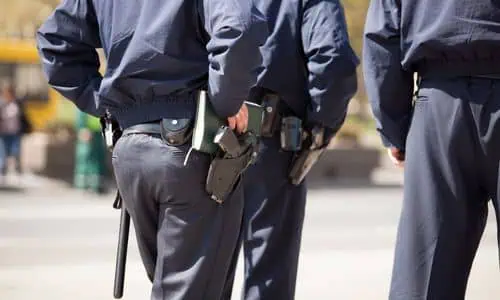
Uniformed security guards are employed by a wide range of businesses and organizations, including hospitals, schools, retail stores, banks, and government agencies, to provide a visible security presence and to deter criminal activity. However, the question of whether these guards are armed or not is a common one. In this article, we'll explore the use of armed security guards and the legal regulations that govern their use.
Uniformed security guards are responsible for maintaining a safe and secure environment within their assigned premises. They are tasked with a wide range of duties, including monitoring surveillance systems, patrolling the premises, and responding to incidents or emergencies. In addition to their role in maintaining security, uniformed security guards often serve as a visible deterrent to criminal activity.
The use of armed security guards is regulated by state and federal laws. In general, security guards are only allowed to carry firearms if they have completed the required training and have been issued a valid firearms permit by their state. Additionally, armed security guards must adhere to strict guidelines on the use of force, and are only authorized to use their firearms in self-defense or in defense of others.
The training requirements for armed security guards vary by state, but generally involve completing a firearms safety course and passing a firearms proficiency test. In addition to firearms training, armed security guards may be required to undergo additional training in areas such as conflict resolution, de-escalation techniques, and emergency response.
The presence of armed security guards can provide a significant deterrent to criminal activity. In addition, armed security guards are often better equipped to respond to violent incidents or emergencies, as they have the necessary tools and training to handle such situations. The use of armed security guards can also provide peace of mind to employees, customers, and visitors to the premises.
The use of armed security guards is not without its drawbacks. The presence of armed guards can create a perception of danger or intimidation, and may discourage some people from visiting the premises. Additionally, the use of armed guards can be costly, as it requires additional training, equipment, and liability insurance.
The use of armed security guards can also raise liability concerns for businesses and organizations. If an armed guard uses their firearm improperly, the business or organization that employed them may be held liable for any resulting injuries or damages. As a result, it's important for businesses and organizations to carefully consider the risks and benefits of using armed security guards.
There are a number of alternatives to using armed security guards. For example, businesses and organizations can invest in surveillance systems, access control systems, and other security technologies. They can also hire unarmed security guards or use off-duty police officers to provide a visible security presence.
Michael D. Julian is President of MPS Security & Protection and a 30-plus-year veteran of the security and investigations industry. He served as President of the California Association of Licensed Investigators (CALI) from 2005 to 2015 and has led executive protection, residential security, and corporate investigations engagements for Fortune 500 principals, high-net-worth families, and public figures across the United States. Connect with Michael on LinkedIn.

Since 1967, MPS Security & Protection has delivered professional protective security grounded in respect, coordination, and discretion. We’re a 3rd-generation firm with longstanding client relationships and worldwide connections.
“No two clients are the same, and neither are their needs. We protect what matters most, so you don't have to.” — Our protection is tailored to your risks, lifestyle, and operations.


Experts in Executive Protection and Uniformed Security.
Second Generation CEO

President

Executive Protection Manager

Uniform Security Manager
RST teams safeguard homes and families with 24/7 protection and low-profile coverage.
We’re always looking for professional Executive Protection Agents and Uniformed Security Officers. Apply through our portal.
Let’s discuss your needs and design a protection plan that fits your risk profile.
The greatest threat to a protected client is often medical, not criminal. Learn how professional executive protection teams build medical preparedness… By: Michael D. Julian Counter-surveillance is how executive protection teams spot people watching a principal before an attack. Here is how it works and why it matters in 2… By: Michael D. Julian The work that prevents an incident usually happens before the principal arrives. Here is what an executive protection advance team does to survey a ve… By: Michael D. Julian Ground transportation is the highest-risk phase of an executive's day. Here is how professional protection teams plan vehicles, routes, and trained dr… By: Michael D. Julian Protective intelligence is how executive protection teams find and assess threats before they materialize. Here is what it covers, why it matters, and… By: Michael D. Julian How professional executive protection teams plan annual shareholder meetings and investor days, from advance work and venue security to activist expos… By: Michael D. Julian How family offices structure executive protection across principals, spouses, and adult children in 2026 â€" including covert posture, residential cov… By: Michael D. Julian How corporate threat assessment teams bring HR, Legal, and Security together to identify, evaluate, and manage individuals of concern before incidents… By: Michael D. JulianRecent MPS Security Insights

Medical Preparedness in Executive Protection: Why Every Detail Needs an Emergency Action Plan
Counter-Surveillance In Executive Protection
What an Executive Protection Advance Team Actually Does: How Venues Are Surveyed Before the Principal Arrives
Secure Transportation for Executives: How Protection Teams Plan Vehicles, Routes, and Drivers
Protective Intelligence: How Executive Protection Teams Identify Threats Before They Reach the Principal
Executive Protection at Annual Shareholder Meetings and Investor Days: How Public-Company Boards Plan for Activist and Threat Exposure
Executive Protection for Family Offices: A 2026 Guide to Protecting Principals, Spouses, and Adult Children
Workplace Threat Assessment Teams: How HR, Legal, and Security Should Collaborate to Prevent Targeted Violence