
Michael Julian
Second Generation CEO
Executive protection cost is driven by six things: how many hours of coverage you need, how many agents that coverage requires, the qualifications and licensing of those agents, whether transportation is included, how much advance and intelligence work precedes each movement, and the risk level of the environment. Any quote that does not make those six variables visible is not a quote you can compare.
At MPS Security, the question we get most often from a first-time buyer is some version of "what should this cost?" The honest answer is that there is no single number, but there is a short list of factors that explains almost all of the variation between one proposal and the next.
Because they are usually not the same job.
One firm may be quoting a single unarmed agent meeting the principal at a venue. Another may be quoting a two-agent detail with a dedicated driver, a venue advance conducted 48 hours earlier, and a medical plan. Both proposals say "executive protection" at the top. They are different products with different failure modes.
This is why vendor selection has to come before price comparison. If you have not established what a firm actually does before, during, and after a movement, you are comparing two numbers that measure different things. Working through how to evaluate a protection provider before you compare quotes is the step most buyers skip, and it is the one that prevents the expensive mistake.
1. Coverage hours. Event coverage for four hours and residential coverage around the clock are not on the same scale. Continuous coverage requires shift rotation, which multiplies headcount well beyond what the hours alone suggest.
2. Team size. One agent can protect a principal in a controlled setting. A principal moving through a crowd, or one facing a known threat, needs a team, and each additional agent is a linear cost increase.
3. Agent qualifications. Licensing, firearms authorization, protective driving, medical certification, and years of relevant experience all price differently. In California, guards and private patrol operators are licensed through the Bureau of Security and Investigative Services within the Department of Consumer Affairs, and armed personnel carry additional permit requirements.
4. Transportation. Whether a vehicle and a trained protective driver are included changes both the cost and the security value of the assignment.
5. Advance and intelligence work. Venue surveys, route planning, and threat research happen before anyone is standing next to the principal. This is the least visible line item and often the highest-value one.
6. Risk environment. A known, credible threat changes staffing, posture, and hours. So does a high-visibility public event.
Labor is the foundation under all of it. The Bureau of Labor Statistics reported a mean annual wage of $42,470 for security guards nationally in May 2025, with a median of $38,020 (BLS, 2026). Protective agents with licensing, driving, and medical credentials sit well above that baseline, and a rate that looks unusually low usually means the personnel are closer to it than you would want.
It is a risk decision first and a cost decision second, though it affects both. Armed personnel carry additional licensing, training, insurance, and liability considerations, and those flow into the rate. Unarmed coverage is not automatically the budget option either, because in many environments an unarmed posture is the correct one and is staffed by equally experienced people.
Getting the armed versus unarmed decision right matters more than getting it cheap. Choosing armed coverage for a corporate campus where it is unnecessary buys visibility you may not want. Choosing unarmed coverage against a credible, specific threat buys a gap.
Because most of what protection does happens before anything happens.
The FBI designated 34 active shooter incidents in the United States in 2025 and reported that nearly 68 percent involved planning and preparation by the attacker (FBI, 2026). Threats that involve planning can, in principle, be detected during planning. That detection is what advance work, protective intelligence, and venue surveys are for.
A proposal with no advance line item is cheaper on paper because it has removed the part of the service that works upstream of an incident. That is a real trade, and it should be made deliberately rather than by accident.
Ask for these in writing before signing anything:
• Number of agents and their specific roles
• Hours of coverage and how shift changes are handled
• Whether advance work is included, and how many hours
• Licensing and certification levels of assigned personnel
• Whether vehicles and protective drivers are included
• Insurance coverage and limits
• Escalation procedure if the threat picture changes mid-assignment
• Who your point of contact is and how quickly they respond
If a firm cannot answer these quickly, the number at the bottom of the page is not meaningful.
How much does executive protection cost per day? There is no single rate, because daily cost depends on team size, coverage hours, whether transportation is included, and the qualifications of the assigned agents. A single unarmed agent covering a controlled four-hour event and a multi-agent detail with a protective driver and prior advance work are different services at very different price points.
Is one agent ever enough? Sometimes. A single experienced agent can be appropriate for a controlled environment with a low threat profile and limited public exposure. Crowds, unfamiliar venues, extended travel, and any specific known threat generally require a team.
Why does advance work cost extra when nothing happens? Advance work is what makes "nothing happening" the likely outcome. Venue surveys, route planning, and threat research identify problems while they are still cheap to solve, and removing that line item removes the preventive part of the program.
Does hiring armed agents always cost more? Usually, because armed personnel carry additional licensing, training, insurance, and liability requirements. But the decision should be driven by the threat assessment rather than the budget, since an unarmed posture is the correct choice in many corporate environments.
How far in advance should we book protection? For a planned event, several weeks is ideal, because it allows time for a proper venue advance. Short-notice coverage is possible and routine, but it compresses or eliminates the preparation phase.
If you are trying to compare proposals and cannot tell what you are actually buying, that is a solvable problem. MPS Security & Protection builds protection programs scoped to an assessed threat rather than to a template, for executives, family offices, and organizations across California and nationally. Contact us to talk through your requirements.
Michael D. Julian has more than 30 years of experience in executive protection, corporate security, and investigations. He served as President of the California Association of Licensed Investigators from 2005 to 2015 and leads MPS Security & Protection's protective operations. Connect with him on LinkedIn.

Since 1967, MPS Security & Protection has delivered professional protective security grounded in respect, coordination, and discretion. We’re a 3rd-generation firm with longstanding client relationships and worldwide connections.
“No two clients are the same, and neither are their needs. We protect what matters most, so you don't have to.” — Our protection is tailored to your risks, lifestyle, and operations.


Experts in Executive Protection and Uniformed Security.
Second Generation CEO
President
Executive Protection Manager

Uniform Security Manager
RST teams safeguard homes and families with 24/7 protection and low-profile coverage.
We’re always looking for professional Executive Protection Agents and Uniformed Security Officers. Apply through our portal.
Let’s discuss your needs and design a protection plan that fits your risk profile.
Uniformed security guards and executive protection solve different problems. A Southern California guide to choosing, or combining, the right service. By: Michael D. Julian Retail theft and violence are both rising while seasonal hiring falls. Here is how Southern California retailers should scope holiday security coverag… By: Michael D. Julian A California workplace violence restraining order is a court order an employer can seek to protect employees from a credible threat. Here is what it c… By: Michael D. Julian California employers must maintain a written workplace violence prevention plan, a violent incident log, and annual training under Labor Code 6401.9. … By: Michael D. Julian Executive protection quotes vary widely for reasons that are rarely explained. Here are the six factors that actually drive the cost of a protection p… By: Michael D. Julian University presidents, provosts, and trustees are public figures on an open campus. Learn how executive protection teams plan coverage for the fall se… By: Michael D. Julian Campaign events put candidates in unscreened crowds on short notice. Learn how executive protection teams plan candidate security, rallies, town halls… By: Michael D. Julian Conferences and trade shows put executives in crowded, open, publicly scheduled venues. Learn how executive protection works at business events, from … By: Michael D. JulianRecent MPS Security Insights
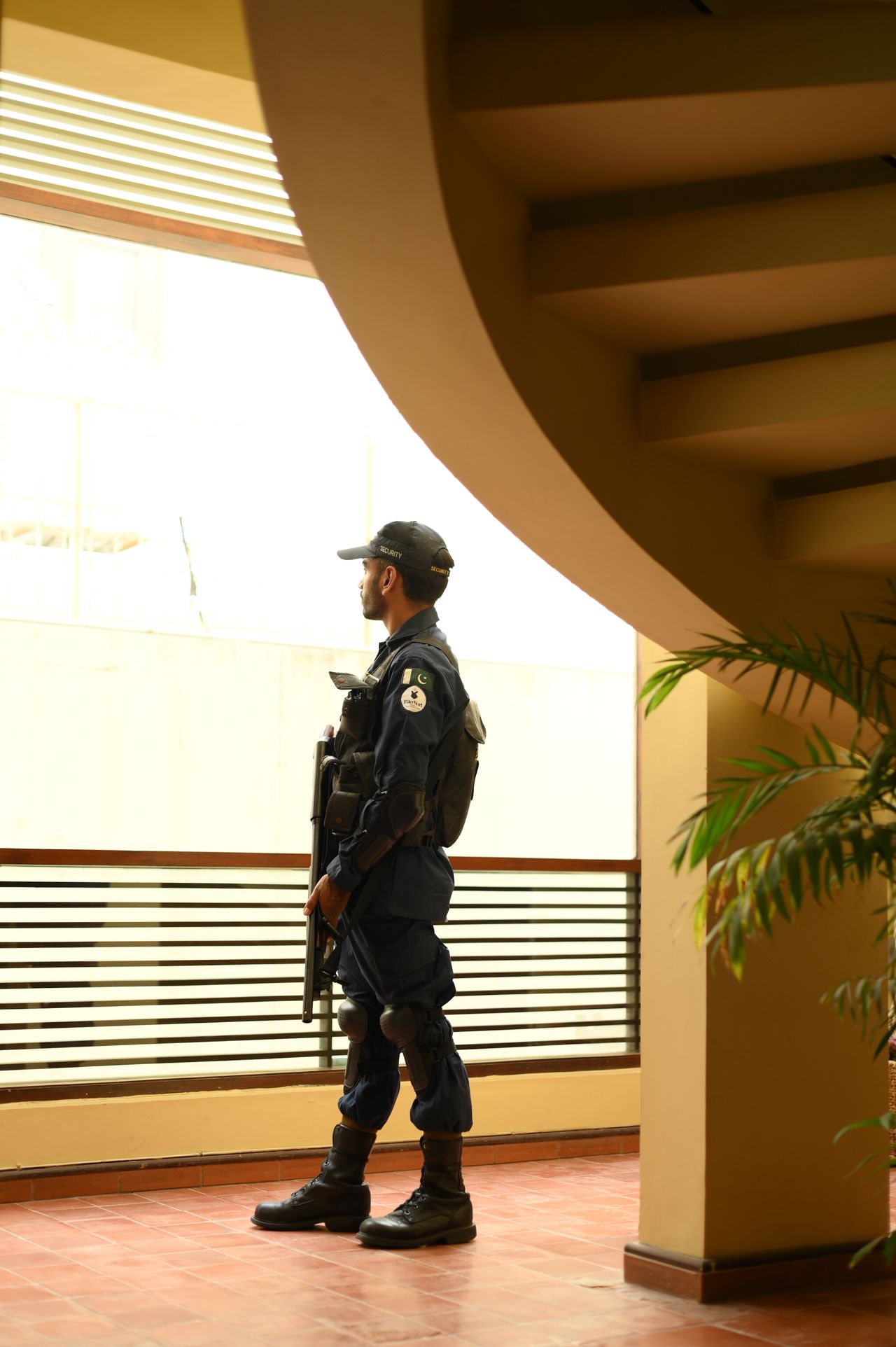
Uniformed Security Guards vs. Executive Protection: Choosing the Right Service for Your Southern California Business
Holiday Retail Security in Southern California: Staffing the Q4 Surge Before Black Friday
Workplace Violence Restraining Orders in California: What They Do, and Where Security Fits
California SB 553: What a Workplace Violence Prevention Plan Requires, and Where Security Fits
What Does Executive Protection Cost, and What Actually Drives the Price?
Executive Protection for University Presidents and Campus Leadership: Security Planning for the Fall Semester
Executive Protection for Political Candidates and Campaign Events: Security Planning for the 2026 Campaign Season
Executive Protection for Business Conferences and Trade Shows: Security for High-Exposure Events