

Michael Julian
Second Generation CEO
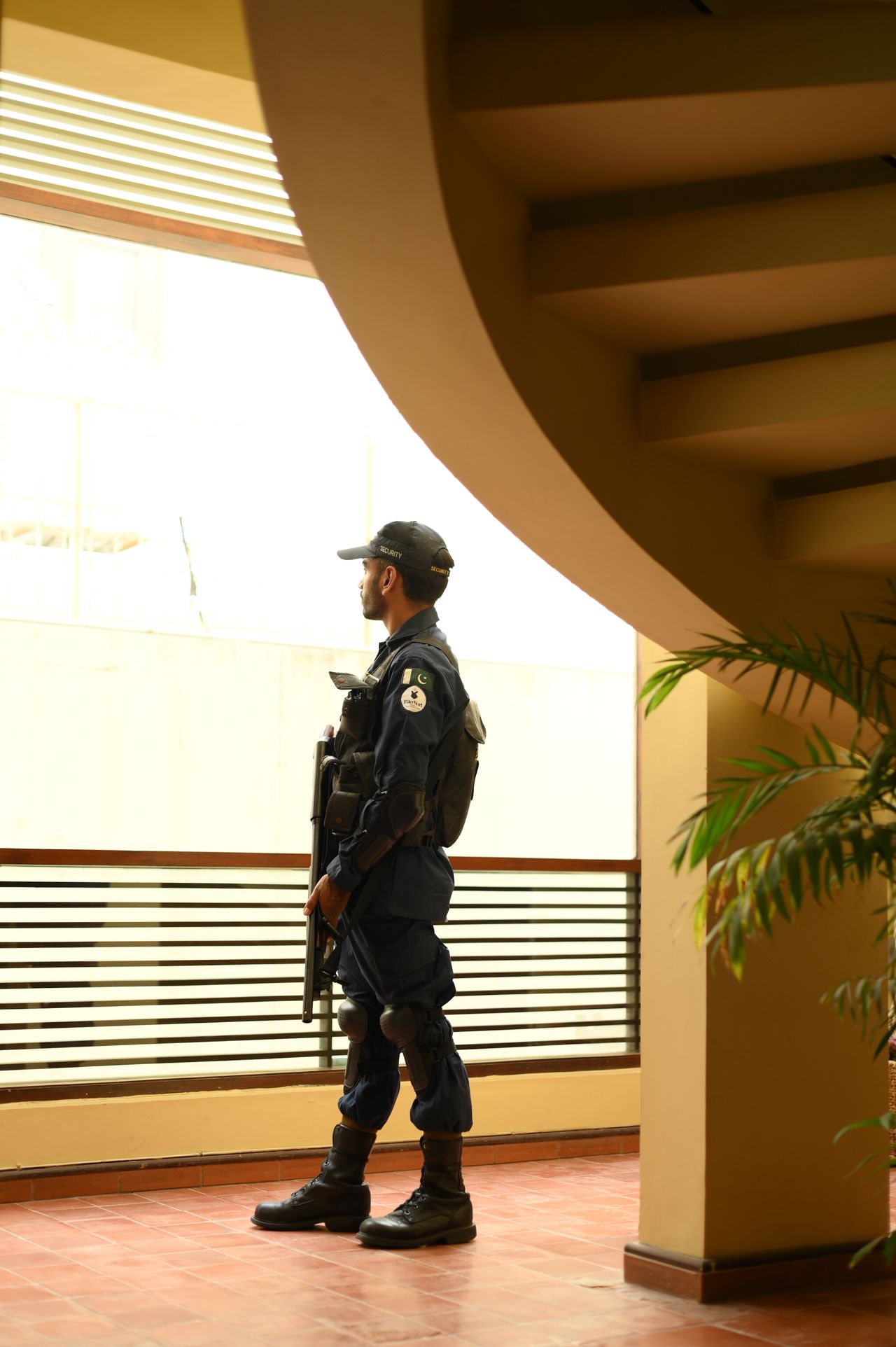
Uniformed security guards and executive protection are not interchangeable services. A uniformed guard secures a fixed location, such as a lobby, retail floor, or construction site, and is meant to be visible. Executive protection secures a specific person as they move through variable, often public, environments, and is built around threat assessment and advance planning rather than a static post. Southern California businesses that confuse the two typically end up paying for the wrong solution, or discover the gap only after an incident exposes it.
A uniformed security officer is a deterrent and a first responder for a defined physical location. Their presence discourages theft, trespassing, and disorder, and they are trained to observe, report, and, when authorized, exercise a citizen's power to arrest until law enforcement arrives. California regulates this work closely: the Bureau of Security and Investigative Services (BSIS) requires every security guard to register for a guard card, which includes a background check through the California Department of Justice and FBI, mandatory power-to-arrest training before registration, 32 hours of security officer skills training within the first six months, and eight hours of continuing training every year after that (California BSIS, Security Guard Fact Sheet). This is a real, regulated profession, and demand for it is not shrinking. The U.S. Bureau of Labor Statistics counted 1,294,300 security guards employed nationally as of 2025, with roughly 157,200 openings projected each year through 2035 as the workforce turns over (U.S. Bureau of Labor Statistics, Occupational Outlook Handbook, 2025).
A guard's authority and training are scoped to a location, not to a person's movement pattern, travel itinerary, or public exposure. A retail store, office lobby, or event venue benefits enormously from a visible, trained uniformed presence. A company principal who is publicly recognizable, faces a specific credible threat, or needs to move through unscreened public spaces, hotel lobbies, and vehicles on a predictable schedule needs something structured differently.
Executive protection is built around the person, not the property. It starts with a threat and vulnerability assessment specific to that individual, includes advance work at every location the principal will visit, and often uses a low-profile protective presence built around one principal rather than a visible guard post, because the objective is to prevent an incident from ever reaching the principal, not to secure a fixed perimeter. Protective agents are trained in route planning, medical response, and threat recognition specific to one person's routine, family, and public profile, rather than general crowd and access control for a building.
Many Southern California organizations need uniformed security at their facility and executive protection for their leadership, and the two should be coordinated rather than treated as separate vendors working in isolation. A CEO's office lobby benefits from a trained uniformed presence that screens visitors and controls access, while that same CEO's movement outside the building, at industry conferences, investor meetings, or public appearances, calls for protective planning the lobby guard is not scoped or trained to provide. In our experience managing both service lines, the handoff point between the two is where most gaps appear: a protective detail that stops at the building's front door and a lobby guard who has no visibility into the principal's outside schedule.
Uniformed guard services are typically priced per post, per hour, scaling with coverage hours and whether the post is armed or unarmed. Executive protection is priced around the scope of the assignment, the number of agents required, and how much advance work a schedule demands, and generally costs more per hour than a uniformed post because it requires a smaller number of more specialized personnel rather than shift coverage of a fixed location. Businesses evaluating how Burbank businesses staff uniformed posts day to day should budget uniformed coverage and any executive protection need separately, since combining them into one line item tends to under-resource whichever service gets treated as secondary.
Can the same security company provide both uniformed guards and executive protection? Yes, and there are real coordination advantages to using one company for both, since a single provider can align uniformed facility coverage with a principal's protective schedule rather than leaving a gap between two vendors who do not communicate.
Do uniformed security guards in California need a special license? Yes. California requires every security guard to register for a BSIS guard card, which involves a background check, power-to-arrest training, 32 hours of skills training within six months of registration, and annual continuing education.
Is executive protection only for celebrities and billionaires? No. Executive protection is used by corporate leadership facing a specific credible threat, executives with a public profile through media or litigation, and family offices managing risk for principals, spouses, and adult children, not only high-profile public figures.
How do I know if my business needs executive protection instead of just more uniformed guards? If the risk is tied to a location, a lobby, a warehouse, a retail floor, uniformed guards are usually the right answer. If the risk is tied to a specific person's movement, public exposure, or a credible threat directed at them personally, that calls for executive protection planning instead of, or in addition to, a fixed post.
What is the difference between armed and unarmed uniformed security? Armed guards carry additional licensing requirements on top of the standard BSIS guard card, including firearms qualification and permit requirements, and are typically used where the risk assessment and the client's needs justify that additional level of response capability.
Uniformed security and executive protection solve different problems, and most Southern California businesses need a clear-eyed assessment of which one, or both, actually fits their risk. Contact MPS Security & Protection to talk through a coverage plan built around your facility and your leadership.
Michael D. Julian has more than 30 years of experience in the security and protective services industry and served as President of the California Association of Licensed Investigators (CALI) from 2005 to 2015. Connect with Michael on LinkedIn.

Since 1967, MPS Security & Protection has delivered professional protective security grounded in respect, coordination, and discretion. We’re a 3rd-generation firm with longstanding client relationships and worldwide connections.
“No two clients are the same, and neither are their needs. We protect what matters most, so you don't have to.” — Our protection is tailored to your risks, lifestyle, and operations.


Experts in Executive Protection and Uniformed Security.
Second Generation CEO

President
Executive Protection Manager

Uniform Security Manager
RST teams safeguard homes and families with 24/7 protection and low-profile coverage.
We’re always looking for professional Executive Protection Agents and Uniformed Security Officers. Apply through our portal.
Let’s discuss your needs and design a protection plan that fits your risk profile.
Uniformed security guards and executive protection solve different problems. A Southern California guide to choosing, or combining, the right service. By: Michael D. Julian Retail theft and violence are both rising while seasonal hiring falls. Here is how Southern California retailers should scope holiday security coverag… By: Michael D. Julian A California workplace violence restraining order is a court order an employer can seek to protect employees from a credible threat. Here is what it c… By: Michael D. Julian California employers must maintain a written workplace violence prevention plan, a violent incident log, and annual training under Labor Code 6401.9. … By: Michael D. Julian Executive protection quotes vary widely for reasons that are rarely explained. Here are the six factors that actually drive the cost of a protection p… By: Michael D. Julian University presidents, provosts, and trustees are public figures on an open campus. Learn how executive protection teams plan coverage for the fall se… By: Michael D. Julian Campaign events put candidates in unscreened crowds on short notice. Learn how executive protection teams plan candidate security, rallies, town halls… By: Michael D. Julian Conferences and trade shows put executives in crowded, open, publicly scheduled venues. Learn how executive protection works at business events, from … By: Michael D. JulianRecent MPS Security Insights
Uniformed Security Guards vs. Executive Protection: Choosing the Right Service for Your Southern California Business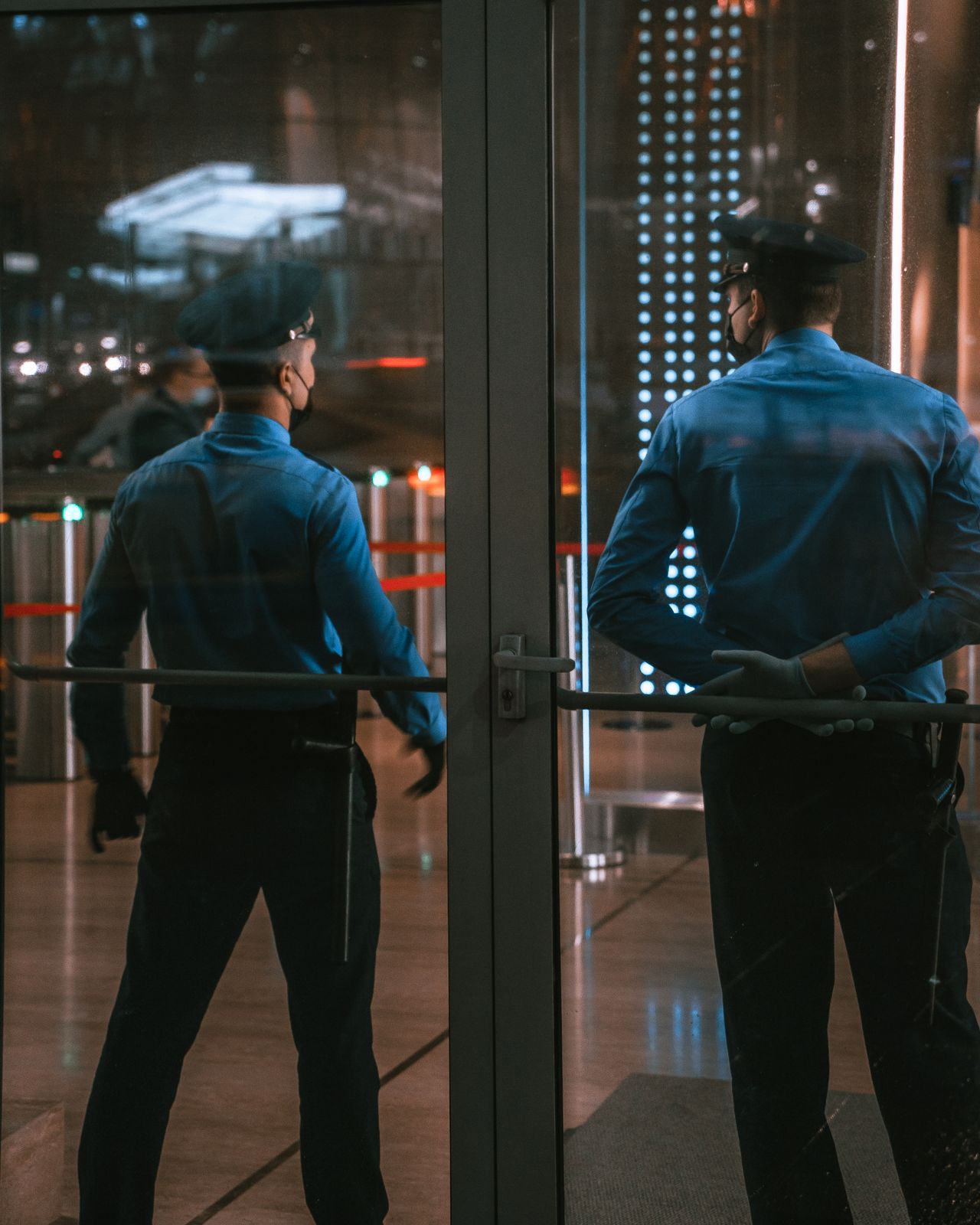
Holiday Retail Security in Southern California: Staffing the Q4 Surge Before Black Friday
Workplace Violence Restraining Orders in California: What They Do, and Where Security Fits
California SB 553: What a Workplace Violence Prevention Plan Requires, and Where Security Fits
What Does Executive Protection Cost, and What Actually Drives the Price?
Executive Protection for University Presidents and Campus Leadership: Security Planning for the Fall Semester
Executive Protection for Political Candidates and Campaign Events: Security Planning for the 2026 Campaign Season
Executive Protection for Business Conferences and Trade Shows: Security for High-Exposure Events